In today's pretty competitive world, getting your procurement game right is more important than ever if you want to succeed globally. Companies like Stacir Conductorare really pushing the boundaries and leading the charge in this space. Their whole approach is all about teamwork and making things efficient. By leveraging cutting-edge tech and digging into data analytics, Stacir Conductor is actually changing the way traditional procurement works, making it smarter and more agile.
For companies looking to step up their procurement strategies, sticking to best practices is kinda non-negotiable. What we see from Stacir Conductor's experience is that building solid relationships with suppliers can really pay off in the end. Plus, being flexible and ready to roll with market changes is super important. But, yeah, it's not all smooth sailing—many organizations still struggle with actually putting these ideas into practice.
Some folks, surprisingly, don’t quite see how crucial continuous improvement is when it comes to procurement. Stacir Conductor keeps encouraging teams to review their processes regularly—that way, they can spot areas that need a little extra TLC. Moving towards excellence in global procurement really starts with a genuine commitment to learn, adapt, and grow. It’s a journey, not a one-and-done kind of thing.

Overview of Stacir Conductor in Global Procurement
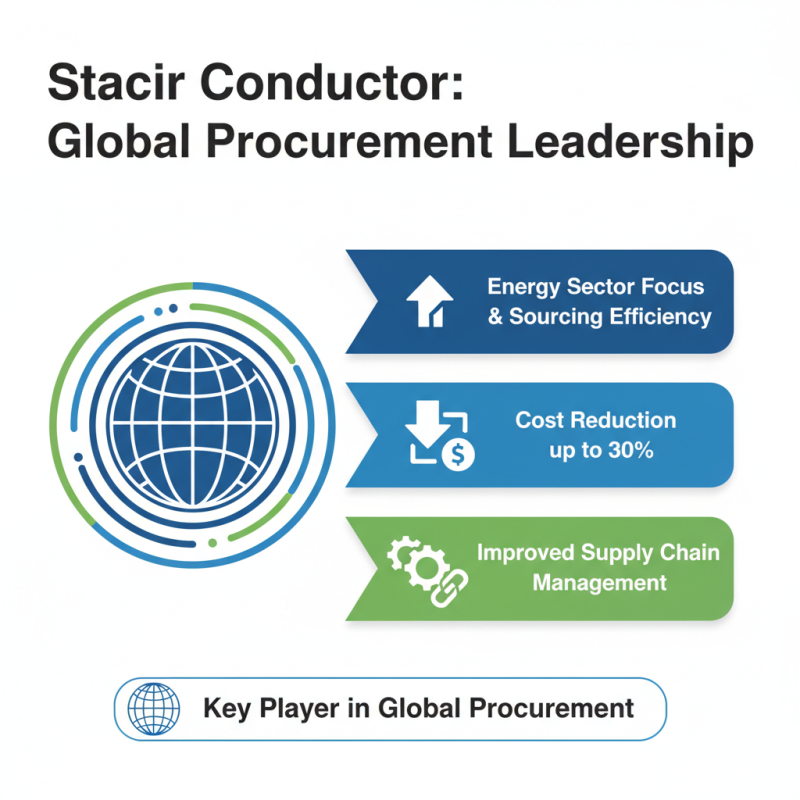
In the realm of global procurement, Stacir Conductor has established a significant position. The efficient sourcing of materials, especially in the energy sector, plays a critical role. Studies show that effective procurement strategies can lower costs by as much as 30%. This statistic highlights the potential for improving supply chain management.
Stacir Conductor, particularly with products like Aluminium Steel Reinforced Conductor, has been recognized for its innovative approach. These conductors offer superior strength and reduced transmission losses. A report by the International Energy Agency indicates that upgrading existing infrastructure with advanced materials can enhance efficiency by more than 15%. Yet, while the merits are clear, some procurement processes remain cumbersome.
Many organizations struggle with outdated practices and lack of digital integration. This not only affects the speed of procurement but can also lead to errors. A recent survey revealed that 40% of procurement professionals feel overwhelmed by their current systems. Thus, there’s a pressing need for re-evaluation and adaptation of strategies. Adopting a flexible framework may be key to unlocking further efficiencies.
Key Challenges in Global Procurement Solutions
Global procurement solutions face several key challenges that can impact efficiency and effectiveness. One significant challenge is the lack of visibility across the supply chain. Companies often struggle to obtain real-time information about suppliers and inventory. This can lead to delays and increased costs. Without clear insights, planning becomes difficult.
Another issue is cultural differences in international markets. Each region has its own business practices and communication styles. Misunderstandings can result in conflicts or delays in negotiations. Adapting to these various cultures is essential for building strong relationships. Training and education about these differences can be beneficial, yet time-consuming.
Additionally, compliance with ever-changing regulations can be daunting. Different countries have varying rules regarding procurement activities. Staying updated on these regulations is crucial. Failure to comply can lead to significant penalties. Organizations need robust compliance programs. These programs must evolve as regulations change, which can create an ongoing burden. Embracing technology can help streamline compliance processes, but it requires a shift in mindset and operations.
Best Practices for Implementing Stacir Conductor
When implementing best practices for Stacir Conductor, focus on collaboration and communication. Effective communication ensures everyone is on the same page. Regular updates can help identify potential issues early. Streamlining the procurement process is essential for success. Using data analytics can improve decision-making as well. Analyze past procurement activities to find areas for improvement.
It's vital to train your team on the specifics of Aluminium Conductor Steel Reinforced Cable. Knowledgeable staff can enhance efficiency and minimize risks. Encourage feedback to foster a culture of continuous improvement. Mistakes are learning opportunities, not failures. Reflecting on what works and what doesn't can lead to better strategies.
Establishing clear metrics for progress is another important practice. Track performance regularly to assess outcomes of your procurement solutions. Setting realistic goals helps in managing expectations. Sometimes, plans may not go as intended. Being adaptable and open to changes will benefit your procurement process in the long run.
Integrating Stacir Conductor with Existing Procurement Systems
Integrating Stacir Conductor into existing procurement systems can streamline operations. Companies often face challenges with compatibility and data silos. According to a recent industry report, 70% of procurement systems struggle with integration issues, leading to inefficiencies. A seamless connection between Stacir Conductor and current platforms can enhance data flow and communication.
To achieve effective integration, organizations must prioritize data accuracy. Regular audits of existing data can identify gaps. It's crucial to ensure that the information migrating into the Stacir system aligns with business objectives. A well-executed integration plan reduces the risk of errors and delays, fostering trust among stakeholders.
**Tip:** Engage all departments during the integration process. This collaborative approach can surface hidden challenges and improve overall system performance.
Moreover, consider using Aac All Aluminum Conductor for enhanced electrical efficiency. An industry study noted that conductors with aluminum cores can reduce energy losses by up to 30%. The use of such materials aligns with sustainability goals and cost reduction strategies. Continuous evaluation of new technologies can be a game changer.
**Tip:** Establish a feedback mechanism. This allows teams to share their experiences and suggest improvements on the integrated system. Embracing a culture of innovation can lead to better outcomes.
Stacir Conductor Best Practices for Global Procurement Solutions
| Best Practice | Description | Benefits | Integration Level |
| Centralized Data Management | Utilizing a single platform for all procurement data | Enhanced data accuracy and accessibility | High |
| Supplier Collaboration | Engaging suppliers through shared platforms | Improved supplier relationships and performance | Medium |
| Automation of Procurement Processes | Implementing automated workflows for approvals and orders | Reduced processing time and manual errors | High |
| Performance Analytics | Analyzing procurement data for strategic insights | More informed decision making | Medium |
| Compliance and Risk Management | Ensuring procurement activities meet regulatory requirements | Mitigation of legal and financial risks | High |
Measuring Success: Performance Metrics for Procurement Solutions
Measuring success in procurement solutions involves a set of performance metrics that gauge efficiency and effectiveness. Key metrics include cost savings, supplier performance, and compliance rates. Organizations should track these consistently to understand their procurement landscape. It’s critical to analyze how well suppliers meet delivery times and quality standards. This not only ensures timely projects but also nurtures strong supplier relationships.
Tracking performance isn’t just about numbers. Qualitative feedback helps refine procurement strategies. Engage with stakeholders for their insights. Surveys can reveal pain points not captured in data. Are there recurring issues with specific suppliers? Exploring these areas fosters a growth mindset in procurement teams.
Reflection is essential in this process. Sometimes metrics may suggest success while overlooking underlying challenges. For instance, a low-cost solution might compromise quality. Regularly revisiting and adjusting metrics keeps teams aligned with overall business objectives. Balancing cost with quality creates a sustainable procurement model.
Procurement Performance Metrics
Case Studies: Successful Implementation of Stacir Conductor
In the realm of global procurement solutions, effective implementation of tools like Stacir Conductor can transform processes. Recent studies indicate that companies adopting advanced procurement systems witness a 20% reduction in costs. This reduction stems from enhanced visibility and efficiency in supply chain operations.
Consider a case where a manufacturing firm tailored Stacir Conductor to streamline their sourcing process. They reported a 30% improvement in supplier collaboration. Regular data analytics helped identify the best suppliers, resulting in quicker turnaround times. However, issues arose when integrating legacy systems, highlighting the need for careful planning and employee training.
Another example involves a tech firm that utilized Stacir Conductor for their procurement needs. By leveraging real-time data, they increased their purchasing accuracy by 25%. This case emphasizes the importance of continual system evaluation and adaptation. Companies must acknowledge potential gaps in technology integration to achieve optimal results. These examples reflect the importance of practical approaches in enhancing procurement practices globally.
Future Trends in Global Procurement and Stacir Conductor
The landscape of global procurement is evolving rapidly. As companies seek to optimize their supply chains, a focus on innovative materials is critical. Reports indicate that the use of lightweight materials, such as the All Aluminum Alloy Conductor, has increased by 15% in recent years. This shift is driven by the need for efficiency and sustainability.
Future trends highlight the importance of data-driven decision-making. The global procurement market is projected to reach $7 trillion by 2025, with automation and AI playing significant roles. Businesses utilizing advanced analytics can make informed choices about suppliers, reducing costs and improving quality. However, companies must remain cautious. Data security and vendor reliability are pressing concerns that could derail progress.
Sustainability is another key trend. A study found that over 70%of procurement leaders prioritize eco-friendly materials. The All Aluminum Alloy Conductor, known for itsreduced environmental impact, aligns with these values. However, the transition to sustainable options requires a cultural shift within organizations. Many companies still struggle with incorporating sustainable practices consistently, indicating a critical area for reflection. The journey ahead is complex and requires adaptation and commitment.
Harnessing Advanced Performance: The Impact of STACIR Conductor on Energy Efficiency in Modern Electrical Systems
The STACIR conductor represents a pivotal advancement in energy efficiency for modern electrical systems, particularly in enhancing transmission capacity. Its innovative trapezoidal wire configuration not only increases the cross-sectional area but also significantly boosts conductivity. This makes it an optimal choice for re-conductoring projects, allowing for the replacement of existing overhead conductors without necessitating modifications to tower infrastructures. This feature not only reduces installation complexities but also minimizes downtime during upgrades, making it an efficient solution for utilities aiming to enhance the performance of their transmission lines.
Equipped with an INVAR core and outer layers crafted from Super Thermal Aluminum (STAL) alloy, the STACIR conductor is engineered for resilience and efficiency. The INVAR core's exceptional mechanical strength is maintained even at elevated temperatures, enabling operation up to 210°C (410°F) while effectively reducing sag. This durability is crucial in environments where temperature fluctuations are common, as it allows for reliable power transmission. Additionally, the conductor's design makes it particularly suitable for applications in flat terrain or regions with minor elevation changes, streamlining implementation while maximizing energy efficiency across electrical systems.
FAQS
: Major challenges include lack of supply chain visibility and cultural differences.
Each region has unique practices. Misunderstandings can delay negotiations.
Key metrics include cost savings, supplier performance, and compliance rates.
It helps avoid delays and reduces costs, aiding better planning.
Implementing digital solutions and re-evaluating strategies is crucial.
They can slow down processes and increase errors, leading to frustration.
Establishing robust compliance programs that adapt to changing regulations is essential.
It reveals insights that metrics might miss, helping refine strategies.
Reflect on underlying challenges to ensure quality isn't compromised.
Technology streamlines compliance and improves visibility across supply chains.
Conclusion
The article titled "Stacir Conductor Best Practices for Global Procurement Solutions" provides a comprehensive overview of the Stacir Conductor and its role in enhancing global procurement processes. It outlines key challenges faced by organizations in global procurement, such as managing supplier relationships and optimizing costs. Best practices for implementing Stacir Conductor are discussed, emphasizing the importance of integration with existing procurement systems to ensure seamless operations.
Additionally, the article highlights the significance of measuring success through specific performance metrics, guiding organizations in evaluating their procurement solutions. Case studies illustrate successful implementations of Stacir Conductor, showcasing its effectiveness in real-world applications. Finally, the article anticipates future trends in global procurement, suggesting that the Stacir Conductor will play a pivotal role in shaping innovative procurement strategies moving forward.